Collision Repair: A Realistic Timeline Guide for Orange County Drivers
Most drivers assume collision repair takes a few days. S. takes 7 to 14 business days, and in high-demand metro areas like Orange County, that number can stretch even further depending on parts availability, insurance processing, and shop backlog.
What you don’t know about that timeline can cost you money in rental car fees, missed work, and unnecessary stress.
The gap between a 3-day repair and a 3-week repair almost always comes down to factors that are entirely predictable, and preventable, if you know what to look for.
Damage severity matters, but so does how quickly your shop orders parts, whether your insurer requires a separate inspection, and how efficiently the shop manages your claim from day one. Understanding these variables gives you real leverage when choosing where to take your vehicle.
, the repair process follows a defined sequence of steps. Each step has a typical duration, and each one has common failure points that cause delays.
This guide breaks down exactly what drives your repair timeline, what Orange County-specific factors come into play, and what a realistic schedule looks like for the most common types of damage.
Key Takeaways
- Repair timelines vary widely: Minor dent and scratch removal can take 1 to 3 days, while structural or frame repairs may require 2 to 4 weeks or longer.
- Parts availability is one of the biggest delay factors in Orange County, especially for imported vehicles and newer model years where OEM parts require longer lead times.
- Insurance claims add processing time that is separate from the actual repair work, and how your shop handles that coordination makes a significant difference.
- Paint services and curing time are non-negotiable steps that cannot be rushed without compromising the quality and durability of your repair.
- Choosing a shop with streamlined intake, estimating, and claims processes can shorten your total wait time by several business days compared to shops with slower administrative workflows.
Table of Contents
- What Actually Determines How Long Collision Repair Takes
- Orange County Factors That Add Days to Your Repair Timeline
- How Insurance Claims Help — and Hurt — Your Repair Timeline
- Realistic Timelines by Repair Type — and How to Shorten Yours

What Actually Determines How Long Collision Repair Takes
Most Orange County drivers assume a repair timeline is set the moment they drop off their car. In reality, four variables control that clock, and even one of them can double your estimate.
The four core variables:
- Damage severity and structural involvement — surface repairs like dents and scratches typically resolve in 1-3 days; structural or frame damage can run 2-3 weeks
- Parts availability — OEM parts from manufacturers like Honda or Toyota can take 5-14 days to source; aftermarket parts arrive faster but may require fitment adjustments; salvage parts introduce inspection delays
- ADAS sensor and camera recalibration — the single biggest timeline wildcard in 2026 (more on this below)
- Paint curing time — modern waterborne paint systems, now standard across California-compliant shops, require 1-2 additional days depending on humidity and booth conditions
Why ADAS Calibration Is Reshaping Repair Timelines
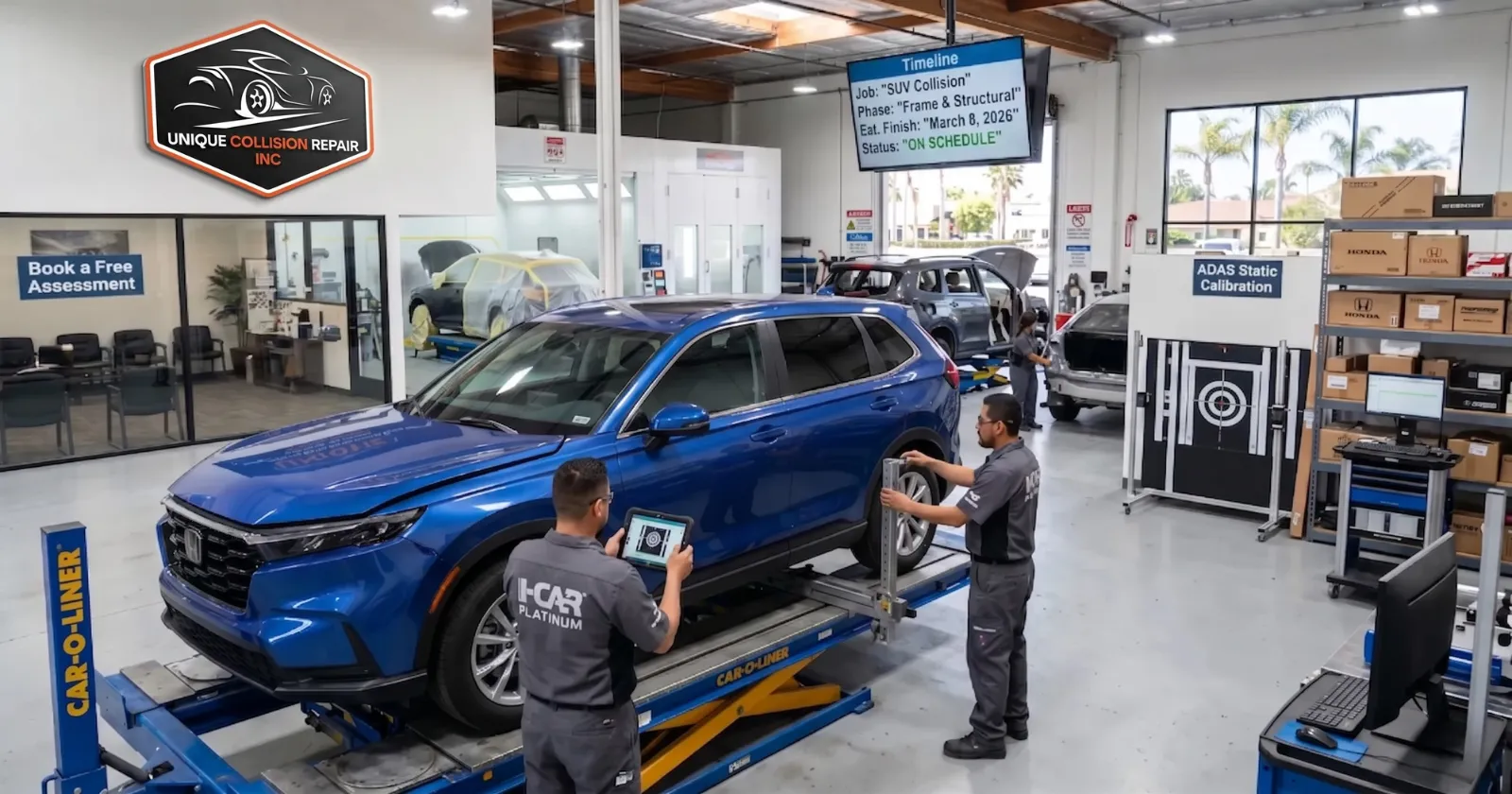
Here is where timelines get complicated. According to industry data, 35.6% of direct repair program (DRP) estimates now include calibration line items. A repair that once took five days can stretch to 10-12 days when radar units, forward-facing cameras, or lane-departure sensors require static or dynamic recalibration per OEM procedures.
Static calibration requires a controlled indoor environment with precise target placement, while dynamic calibration requires road driving under specific speed and condition parameters. Both add labor hours and, in many cases, dealer involvement for certain makes.
Expert note: If your vehicle has a front-end impact and was built after 2020, assume calibration is required. Skipping it creates liability and safety issues regardless of how minor the collision appeared.
The Total Loss Factor Orange County Drivers Overlook
At a projected 25%+ total loss frequency in 2026 across Southern California, many Westminster, Huntington Beach, and Garden Grove drivers will never reach the repair phase at all. Insurers typically issue a total loss determination within 3-7 days of filing when repair costs approach the vehicle’s actual cash value threshold.
Understanding this early saves weeks of false expectations and unnecessary rental car costs.
Repair Timeline Ranges by Damage Category
| Damage Category | Typical Day Range | Parts Lead Time | Calibration Likely? |
|---|---|---|---|
| Minor (dents, scratches, windshield repair) | 1-3 days | Same day to 3 days | Rarely |
| Moderate (bumper, panel, airbag deployment) | 5-10 days | 3-10 days | Sometimes (50%+) |
| Major (frame, structural, multi-system ADAS) | 14-30+ days | 7-21 days | Almost always |
How Orange County’s Insurance Environment Affects Repair Speed
California’s auto insurance market carries some of the highest claim volumes in the country, and Orange County’s dense traffic corridors — the 405, 22, and 91 freeways — generate a steady stream of collision claims throughout the year. That volume creates real delays at the adjuster level.

In 2026, many major carriers are operating with stretched field adjuster capacity, which means supplement approvals, reinspection requests, and authorization for additional discovered damage can add 3-5 business days to any repair timeline.
Understanding how the claims process intersects with the repair process helps drivers set realistic expectations. The shop cannot begin structural or mechanical repairs until the insurer authorizes the work — and in California, that authorization must align with the insurer’s own damage assessment.
When the shop’s estimate and the insurer’s initial allowance differ, a supplement negotiation begins. This process is normal, but it is time-consuming.
What Drivers Can Do to Accelerate the Process
The single most effective action a driver can take is to file the claim promptly and provide complete documentation from the start. Gaps in documentation — missing photos, incomplete police reports, or delayed filing — give adjusters reasons to slow the process.
A few steps that consistently reduce delays:
- File within 24-48 hours of the incident, even if you’re unsure about proceeding with a claim
- Photograph all damage from multiple angles, including interior components if airbags deployed
- Request a direct repair program shop if your insurer offers one, as these shops have pre-negotiated labor rates and streamlined authorization
- Ask for a written timeline estimate from the shop at intake, broken down by phase: teardown, parts, repair, paint, reassembly, and calibration
- Confirm rental car authorization before dropping off your vehicle, and clarify the daily cap your policy covers
California Insurance Code Section 2695 requires insurers to acknowledge claims within 10 days and accept or deny them within 40 days of receiving proof of loss. Knowing these timelines gives drivers a baseline for when to escalate if a claim stalls.
OEM Parts vs. Aftermarket: The Timeline Tradeoff
Parts sourcing is one of the most underappreciated variables in collision repair timelines. OEM (original equipment manufacturer) parts typically carry longer lead times than aftermarket alternatives, but they maintain fit tolerances, finish quality, and ADAS sensor compatibility that aftermarket parts sometimes do not.
The California Bureau of Automotive Repair requires shops to disclose when aftermarket or recycled parts are used in a repair.
Insurers frequently specify non-OEM parts to reduce claim costs, but vehicle owners have the right to request OEM parts — and in some cases, pay the cost difference out of pocket.
For vehicles with active ADAS systems, using non-OEM sensor housings or mounting brackets can compromise calibration accuracy, which introduces safety risk and potential liability.
| Parts Type | Avg. Lead Time | Cost Level | ADAS Compatibility Risk |
|---|---|---|---|
| OEM (Dealer) | 5-14 days | Highest | Lowest |
| OEM (Aftermarket Supplier) | 3-7 days | Moderate | Low to Moderate |
| Recycled/Used OEM | 1-5 days | Lower | Moderate (age-dependent) |
| Non-OEM Aftermarket | 1-3 days | Lowest | Higher |
Shops certified under I-CAR Platinum or OEM certification programs — such as those holding Honda ProFirst, Toyota Certified, or Ford Certified designations — are required to follow manufacturer repair procedures, which typically mandate OEM or approved parts for structural and safety-system components.
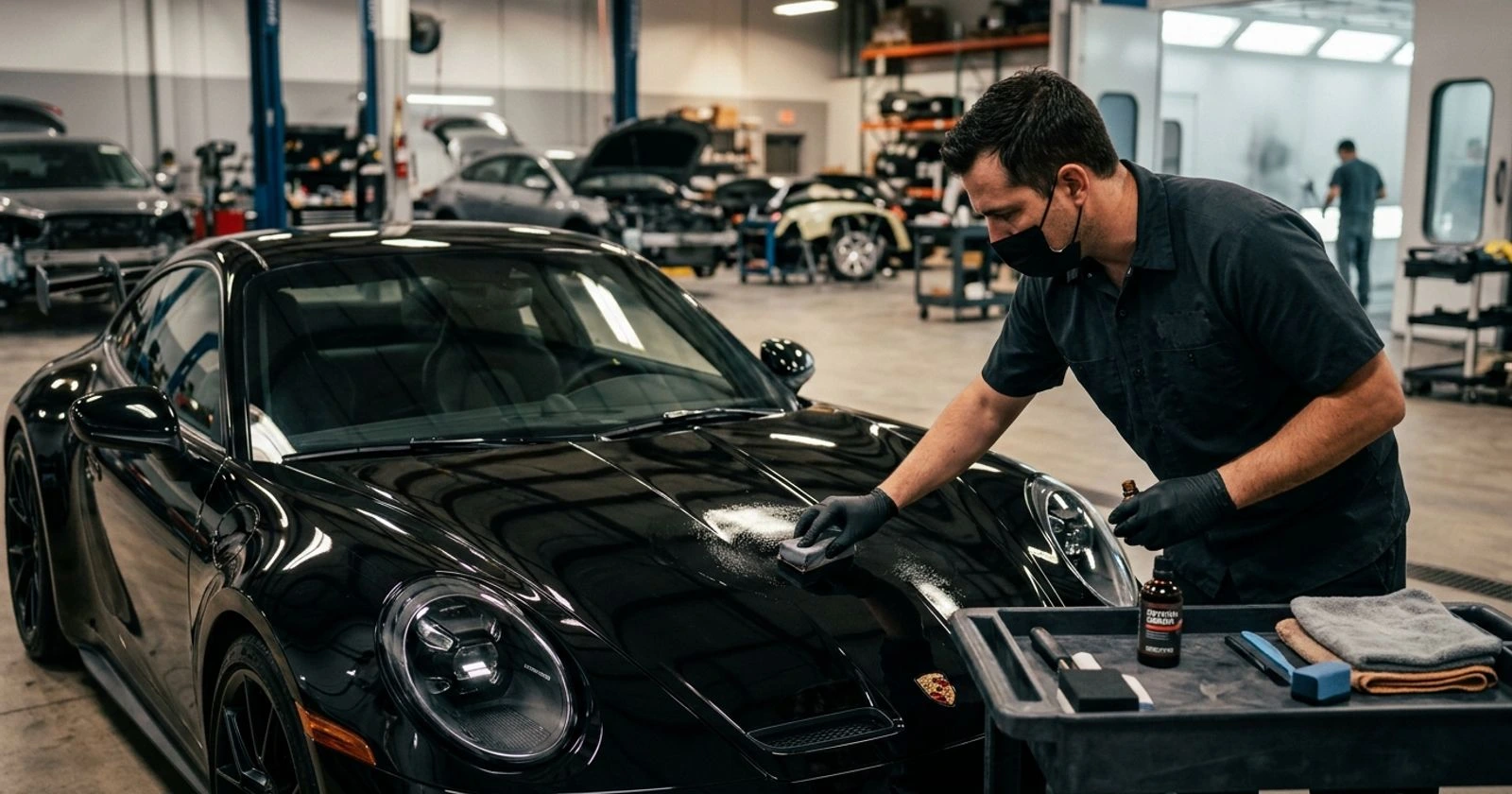
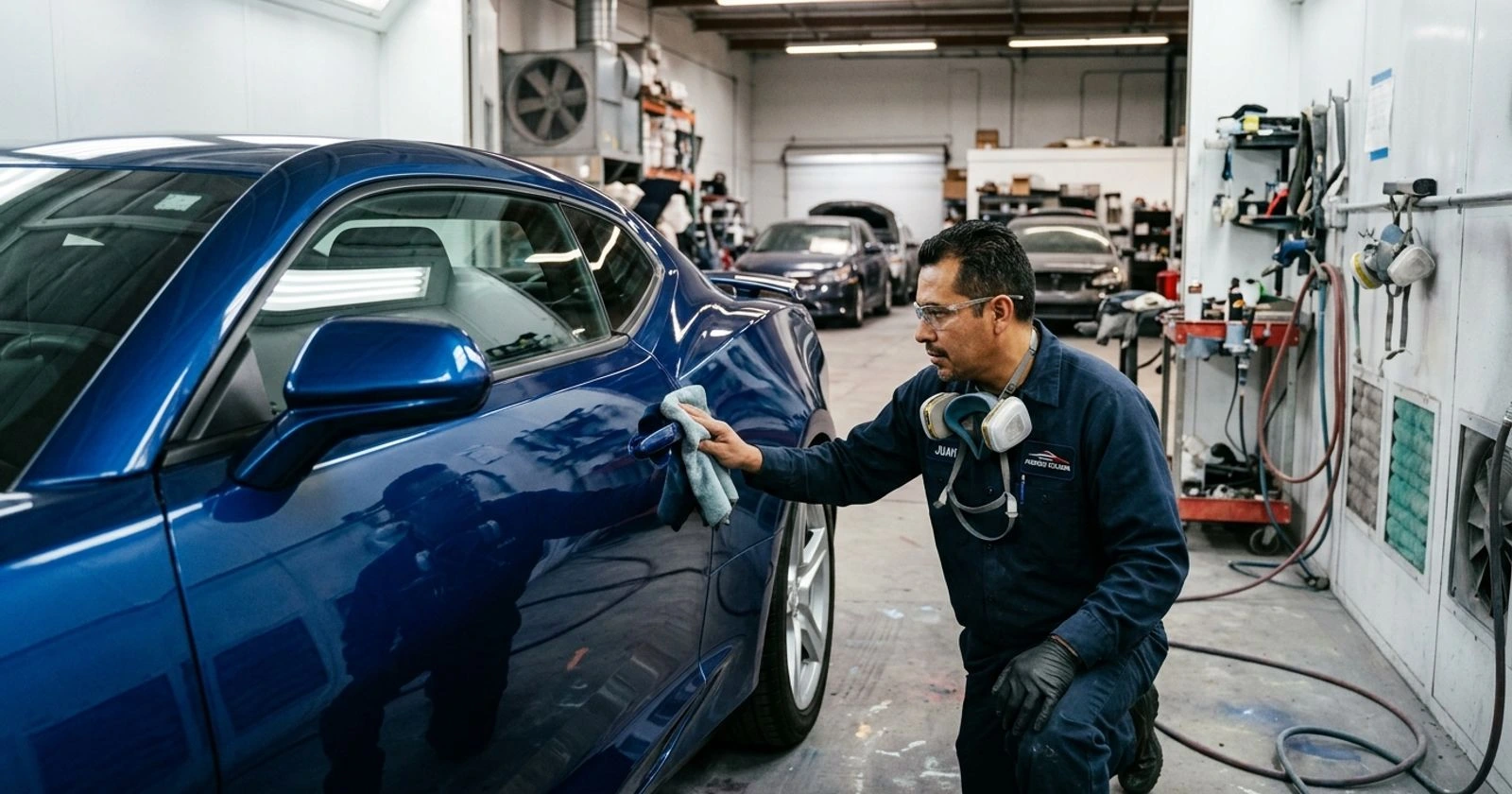
Paint Matching and Color Technology in 2026
, and it is an area where shortcuts become visible fast. Orange County’s year-round sun exposure accelerates oxidation and color shift on exterior panels, which means a paint match that looks accurate indoors can appear off under direct sunlight within weeks if the blending technique is incorrect.
Current industry-standard color matching uses spectrophotometer readings combined with digital paint formula databases maintained by manufacturers like PPG, Axalta, and BASF. These systems account for metamerism — the phenomenon where two colors appear to match under one light source but differ under another.
A properly executed color match requires reading the adjacent panels, not just the damaged one, and blending across panel boundaries when necessary.
For vehicles with pearl, tri-coat, or matte finishes, the complexity and cost increase meaningfully. Multi-stage paint systems require layered application with cure time between coats, which adds to the overall repair timeline. Drivers with premium or specialty finishes should ask shops specifically about their experience with that paint category before authorizing work.
What to Expect During the Repair Process: A Phase-by-Phase Breakdown
Knowing what happens at each stage helps drivers understand why repairs take as long as they do — and recognize when a timeline is reasonable versus when it may indicate a workflow problem.
Phase 1: Intake and Teardown (Day 1-2)
The vehicle is disassembled to expose the full extent of damage. Hidden damage is documented and submitted as a supplement to the insurer. This phase often reveals structural damage that was not visible in the initial estimate.
Phase 2: Parts Ordering and Authorization (Day 2-7)
The shop waits for insurer authorization on any supplemental damage and places parts orders. This is typically the longest wait phase and the one most affected by supply chain conditions.
Phase 3: Structural and Mechanical Repair (Day 4-15, depending on severity)
Frame straightening, panel replacement, and mechanical system repairs are completed using equipment such as Chief Automotive or Car-O-Liner frame systems. I-CAR-trained technicians follow OEM repair procedures to restore structural geometry to factory specifications.
Phase 4: Body and Paint (Day 8-20)
Bodywork is completed, primed, and painted. Paint cure time varies by product and shop equipment. Shops using heated spray booths can reduce cure time significantly compared to ambient-cure systems.
Phase 5: Reassembly and Calibration (Day 15-30+)
All components are reinstalled, electrical systems are tested, and ADAS calibration is performed. A final quality control inspection is completed before the vehicle is returned to the owner.
Choosing a Shop in Orange County: What the Certification Difference Means
Not all body shops operate under the same quality standards, and in a market as active as Orange County’s, the difference between a certified shop and an uncertified one is measurable.
I-CAR Gold Class certification, for example, requires ongoing technical training for all repair technicians — it is not a one-time credential. Shops holding OEM certifications are audited by manufacturers and must maintain specific equipment, tooling, and procedural compliance.
From a practical standpoint, choosing a certified shop reduces the risk of improper repairs, failed calibrations, and warranty disputes. It also simplifies the insurance process, as many carriers maintain preferred shop networks built around certified facilities.
Unique Collision Repair has served Westminster, Huntington Beach, and Garden Grove since 1984 as a family-owned operation, offering a lifetime warranty on repairs alongside insurance claims assistance, collision repair, paint services, dent and scratch removal, and windshield repair. That combination of tenure, warranty coverage, and full-service capability matters most when a repair involves multiple systems and extended timelines.
When evaluating any shop, ask three direct questions:
- What certifications do your technicians hold, and are they current?
- Do you perform ADAS calibration in-house or subcontract it?
- What does your warranty cover, and for how long?
The answers reveal a shop’s actual capability level more accurately than marketing language does.
Costs Orange County Drivers Should Budget For in 2026
Repair costs in Southern California consistently run above national averages due to higher labor rates, parts costs, and regulatory compliance requirements. Based on current market data for Orange County, drivers should expect the following general ranges:
| Repair Type | Estimated Cost Range (2026) |
|---|---|
| Minor dent/scratch removal | $150 – $600 |
| Bumper replacement (painted) | $800 – $1,800 |
| Single panel replacement | $900 – $2,200 |
| Windshield replacement | $250 – $700 |
| Airbag replacement (per unit) | $1,000 – $3,500 |
| Frame/structural repair | $2,500 – $8,000+ |
| Full front-end rebuild | $5,000 – $15,000+ |
These figures represent out-of-pocket exposure before insurance offsets. Drivers carrying comprehensive and collision coverage with deductibles in the $500-$1,000 range will typically pay only the deductible for moderate damage, provided the at-fault determination is clear and the claim is properly documented.
For an accurate estimate specific to your vehicle’s damage, book a free assessment at Unique Collision Repair before accepting an insurer’s initial repair authorization. Getting an independent shop estimate on record protects your right to a complete, properly executed repair rather than a cost-minimized one.
Orange County Factors That Add Days to Your Repair Timeline
Collision repair timelines in Orange County don’t follow a national average. Local logistics, insurance processing loads, and even coastal weather create delays that most generic repair estimates don’t account for.
OEM Parts Delays Through Southern California Ports
Parts routed through the ports of Long Beach and Los Angeles have faced 3-7 additional business days of lead time in 2026 due to ongoing freight congestion and customs processing constraints.
For common vehicles like Honda Civics, Toyota Camrys, and Hyundai Tucson models, shops with established dealer relationships or pre-stocked high-volume inventory can absorb this gap. Shops without those supplier ties simply wait, and so do you.
Insurance Processing in Garden Grove and High-Density ZIP Codes
) and 92683 (Westminster)** carry significantly heavier caseloads than appraisers in less populated markets. This translates to 2-5 additional days on supplement approvals compared to states like Florida, where appraiser availability is less constrained.
If your repair requires a supplemental estimate after teardown reveals hidden damage, that wait is almost unavoidable without proactive communication from your shop.
Why Customer-Pay Jobs Often Move Faster
A notable share of Orange County drivers carry high deductibles or choose to pay out of pocket to protect their insurance premiums. For dent and scratch removal jobs in the $300-$900 range, this actually works in their favor.
Customer-pay repairs bypass the insurance approval queue entirely and are typically scheduled within 1-3 business days, compared to insured claims that may sit in review for a week or more.
Coastal Paint Damage Discovered During Teardown
Shops in Huntington Beach and other coastal cities regularly uncover a hidden timeline factor: salt-air paint oxidation beneath the surface. What looks like a straightforward panel repair in the estimate can reveal compromised primer or substrate corrosion once technicians begin teardown.
Properly addressing this before applying new paint adds 1-2 days of surface preparation, but skipping it risks premature paint failure. Quality paint services account for this upfront rather than patching over the problem.
How Insurance Claims Help — and Hurt — Your Repair Timeline
Insurance moves the repair clock in both directions. Understanding where it speeds things up and where it stalls them helps Orange County drivers set realistic expectations before their car even enters the shop.
DRP Shops vs. Independent Shops: A Timeline Trade-Off
Direct Repair Program (DRP) shops have pre-negotiated labor rates and direct insurer access, which compresses estimate approval from the typical 5-7 days down to 1-2 days. The trade-off: DRP shops often carry higher volume commitments to insurers, which can push your car further back in the queue once approved.
Independent shops take slightly longer on initial approval but frequently offer shorter actual wait times and more flexibility on parts sourcing and repair methods.
California’s Claims Process: Where the Days Go
For Orange County drivers, a typical insurance-involved repair follows this path:
- Initial claim filing: 1 day
- Insurer inspection or virtual estimate: 2-4 days (virtual estimates through apps like CCC ONE are common but often miss hidden damage)
- Supplement approval: 3-7 days (the most common delay point, especially when teardown reveals structural or mechanical damage not visible in photos)
- Parts ordering and delivery: 2-10 days depending on OEM vs. aftermarket sourcing
- Final quality inspection: 1-2 days
Supplement approval is where most Huntington Beach and Garden Grove drivers experience their longest holdup. Insurers require documentation, photos, and sometimes a re-inspection before authorizing additional labor or parts costs.
Windshield Replacement: Standalone vs. Bundled
A standalone windshield replacement takes 1-2 hours of labor, followed by a 24-48 hour ADAS recalibration window required under California law for vehicles with camera-based safety systems. When bundled into an existing collision repair job, windshield work adds only 2-4 incremental hours rather than triggering a separate scheduling cycle. Bundling is almost always the smarter choice.
Pre-Authorization: The Skill That Saves Days
Experienced estimators who know common damage patterns can identify likely supplements before teardown begins and pre-authorize them with the insurer upfront. Shops with decades of local claims history, like those that have been processing Orange County insurance work since the 1980s, routinely cut supplement approval delays by 30-50% using this approach.
Realistic Timelines by Repair Type — and How to Shorten Yours
These figures reflect 2026 Orange County benchmarks, not national averages. Local labor rates, parts distribution through regional suppliers like LKQ and Copart, and Southern California shop volumes all affect how long your specific repair actually takes.
Repair type benchmarks for Orange County drivers:
| Repair Type | Estimated Timeline |
|---|---|
| Windshield repair or replacement | Same day to 48 hours |
| Dent and scratch removal (no paint) | 1–2 days |
| Single-panel repaint | 2–4 days |
| Bumper replacement with sensors | 5–8 days |
| Moderate multi-panel collision with ADAS | 12–20 days |
| Major structural repair | 25–35 days |
Bumper jobs with parking sensors and cameras now routinely stretch past five days because ADAS calibration requires a controlled environment and precise equipment. Shops that sublet this work to a third party add another 1–3 days to that window.
** Shops that stand behind repairs permanently have a structural incentive to conduct thorough initial inspections and pre-authorize supplement requests upfront. That discipline compresses the back-and-forth supplement cycle, which accounts for 20–30% of total repair time at shops without that accountability.
Unique Collision Repair, family-owned since 1984 with a lifetime warranty on repairs, operates on this model, and the difference shows up in fewer mid-repair delays.
Three steps you can take right now to shorten your wait:
- File your insurance claim within 24 hours of the incident. Every day of delay before authorization is a day added to your total timeline.
- Request written parts availability confirmation before authorizing repairs. A verbal “we should have it by Thursday” is not a commitment.
- Ask whether ADAS calibration is performed in-house or sublet. If the answer is sublet, build 1–3 extra days into your expectations.
An accurate, itemized estimate is still the single most effective tool for setting realistic expectations and avoiding mid-repair surprises. Orange County drivers can book a free assessment at and receive a detailed timeline alongside their repair quote before committing to anything.
Frequently Asked Questions
How long does a typical collision repair take?
Most collision repairs take anywhere from 1 to 2 weeks, depending on the extent of the damage, parts availability, and the shop’s current workload.
Minor repairs like dent removal or bumper work can often be completed in 1 to 3 days, while more extensive structural or frame damage may take 3 to 4 weeks or longer. Getting a detailed written estimate upfront helps set realistic expectations before work begins.
Does filing an insurance claim slow down the repair process?
Insurance approval can add 2 to 5 business days to the overall timeline, particularly if a supplemental inspection is required after hidden damage is discovered during disassembly. Working with a shop experienced in insurance claims coordination can significantly reduce delays, since they handle adjuster communication and documentation on your behalf.
Choosing a shop that is already familiar with major carriers like State Farm, Geico, and Allstate often speeds up the approval process.
Why do some repairs take longer than expected?
Hidden structural damage is one of the most common reasons a repair timeline extends beyond the original estimate. Once a vehicle is disassembled, technicians following OEM repair procedures may uncover damage that wasn’t visible during the initial inspection, requiring additional parts orders and labor.
Supply chain conditions in 2026 have also affected parts availability for certain makes and models, particularly for newer vehicles with advanced driver assistance systems (ADAS).
Will my car be drivable while waiting for parts?
In most cases, if your vehicle has significant collision damage, it should not be driven until repairs are complete, as structural integrity and safety systems may be compromised.
Your insurance policy may include rental car coverage for exactly this situation, so it’s worth confirming that with your carrier before dropping your vehicle off. Ask your shop to provide a clear timeline and notify you promptly if parts delays push the completion date back.
Does the type of paint service affect how long repairs take?
Yes, paint work adds meaningful time to any repair, typically 1 to 3 additional days depending on the number of panels being painted and the complexity of the color match.
Modern vehicles often use multi-stage paint systems that require precise mixing, application, and curing time to match the factory finish accurately. A shop with a dedicated paint booth and color-matching technology can minimize this phase without cutting corners on quality.