Rushing to seal your freshly repaired bumper with a protective layer will trap evaporating solvents and destroy thousands of dollars worth of new clear coat. Understanding the exact chemical timeline for ceramic coating after fresh car paint prevents catastrophic adhesion failure and keeps your auto body shop warranty intact.
Key Takeaways
- Wait a mandatory 60 days before applying ceramic coating to allow fresh collision repair paint to fully outgas.
- Collision repair paint cures through a chemical cross-linking process that differs entirely from high-heat factory baking.
- Applying a ceramic layer too early traps evaporating solvents, causing paint failure and voiding repair warranties.
- Orange County coastal salt air and high UV index require specific safe maintenance routines during the 60-day curing window.
Table of Contents
- The 60-Day Rule for Ceramic Coating After Fresh Car Paint
- Orange County Climate Factors: Protecting Uncoated Paint
- Warranty and Insurance Impacts of Ceramic Coating After Fresh Car Paint
- Professional vs. DIY Application on Newly Repaired Panels
- Frequently Asked Questions
The 60-Day Rule for Ceramic Coating After Fresh Car Paint
Stop treating your repaired fender like a brand-new car straight off the dealership lot. Factory paint is baked onto bare metal at 400 degrees before any electronics, plastics, or interiors are installed on the assembly line.
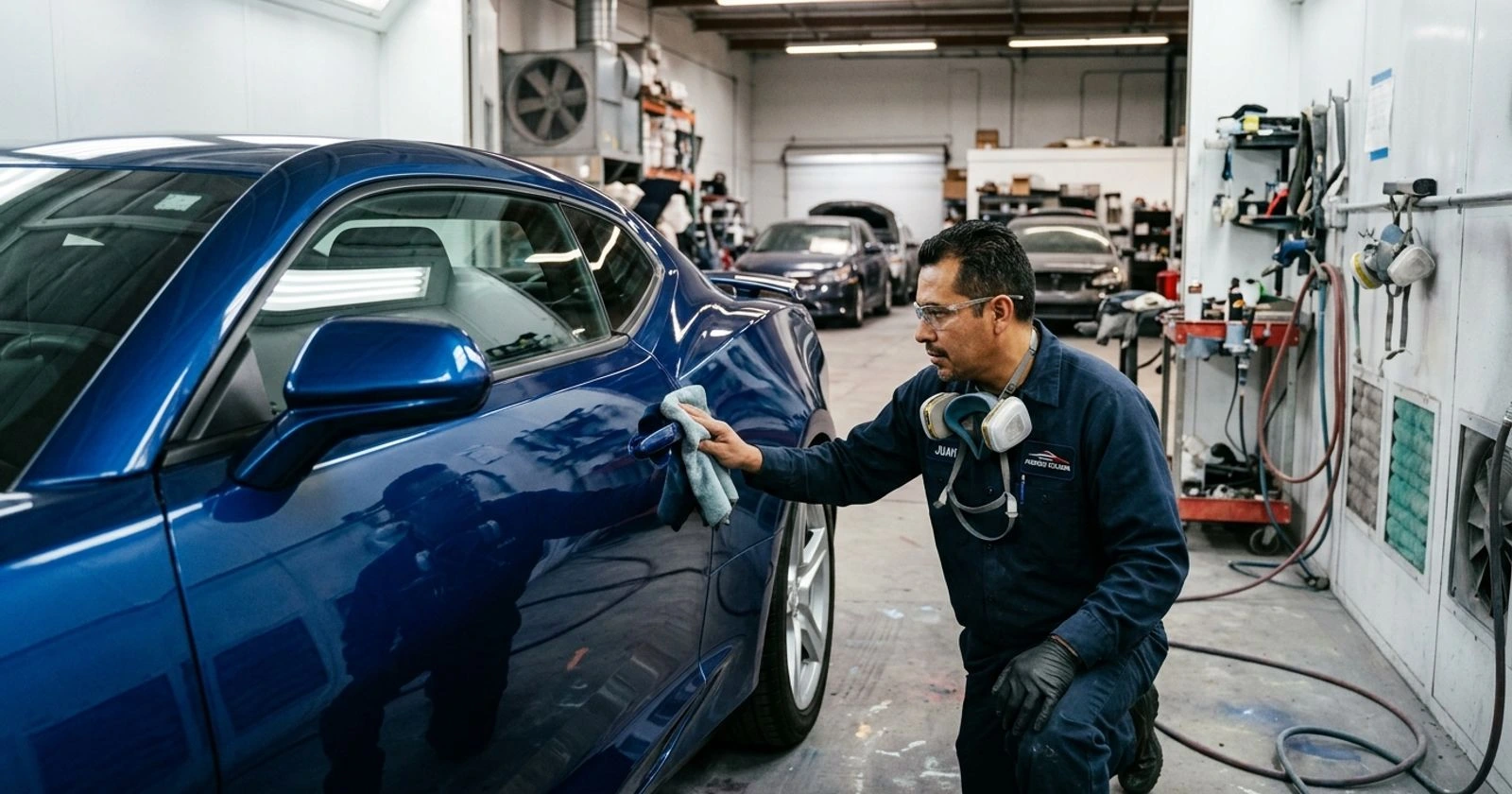
The standard for collision repair paint technology in 2026 dictates that shop-applied paint must cure chemically at much lower temperatures to protect those sensitive assembled components. This lower temperature requires the paint to rely on catalyzed hardeners and a prolonged outgassing process to reach maximum structural hardness.
Solvents must evaporate through the fresh clear coat over several weeks. If you seal that surface too early, you trap those solvents beneath an impermeable barrier. The results are expensive and ugly. You will quickly notice solvent popping, severe adhesion failure, and permanent clouding trapped right under the hardened ceramic layer.
The strict industry timeline is non-negotiable. According to data from Scratches Happen, you must wait a minimum of 72 hours before attempting even a gentle hand wash, though waiting two weeks is optimal. You should wait 30 days before applying any traditional wax. You must wait exactly 60 days before applying a ceramic coating or paint protection film.
From my experience running post-repair assessments, owners who rush the protection phase often ruin perfect bodywork. Give the chemical cross-linking process the actual time it needs to finish.

Orange County Climate Factors: Protecting Uncoated Paint
Leaving fresh paint unprotected for two months in Southern California makes many car owners nervous. The vulnerability of fresh paint during this 60-day waiting period is real, but applying a chemical sealant is the wrong response.
You have to adapt your daily maintenance routine to the local environment instead of trying to accelerate the cure time. If you commute through Huntington Beach or Newport Beach, coastal salt air will naturally settle on your curing clear coat.
This corrosive salt must be removed carefully without relying on aggressive scrubbing or harsh chemicals. Inland areas like Westminster and Garden Grove present a totally different challenge for fresh paint.
Intense UV exposure in these cities accelerates the surface-level cure, but the paint still requires the full 60 days for deep solvent release. Do not let a dry-to-the-touch surface fool you into coating a panel early.
Safe maintenance during this vulnerable window requires strict discipline. Wash the car using only pH-neutral shampoos. Avoid alkaline and acidic car wash shampoos entirely during this outgassing period. Strictly avoid any quick-detailers, spray waxes, or spray sealants that block the microscopic pores of the clear coat.
Pro Tip: Skip the automated car washes entirely during the first 30 days. The harsh mechanical brushes and recycled water will introduce heavy micro-scratches into the soft, outgassing clear coat long before it reaches full hardness.
Warranty and Insurance Impacts of Ceramic Coating After Fresh Car Paint
Applying a coating before the 60-day mark directly interferes with the chemical cure of the repaired panel. This mistake immediately voids most auto body shop paint warranties. Shops simply cannot guarantee paint that has been suffocated by premature chemical sealants and forced into adhesion failure.
When timed correctly, a ceramic application actually protects the underlying collision repair work. It extends the lifespan of the fresh paint and defends against environmental contaminants like bird droppings and industrial fallout. According to auto industry data, properly applied ceramic coatings provide verified protection lasting 1 to 3 years.
Waiting for the right application window ensures this protection works flawlessly.
Insurance claims handle aftermarket ceramic coatings strictly, requiring you to document the exact application date and cost of the coating service. If you cannot prove the coating was applied after the 60-day cure window, adjusters will likely deny coverage for replacing that protective layer in the event of a secondary collision.
Unique Collision Repair is family-owned since 1984 with a lifetime warranty on repairs. We require all customers to follow this exact curing timeline to preserve their coverage. Protecting your financial investment means following the chemistry rather than rushing the timeline.
Professional vs. DIY Application on Newly Repaired Panels
Consumer-grade coatings are heavily marketed, but applying them to fresh paint carries massive risks. Professional-grade applications require precise surface preparation that off-the-shelf DIY kits simply ignore. If you use a Chemical Guys Ceramic Coating kit in your driveway without measuring the underlying cure rate, you are flying blind.
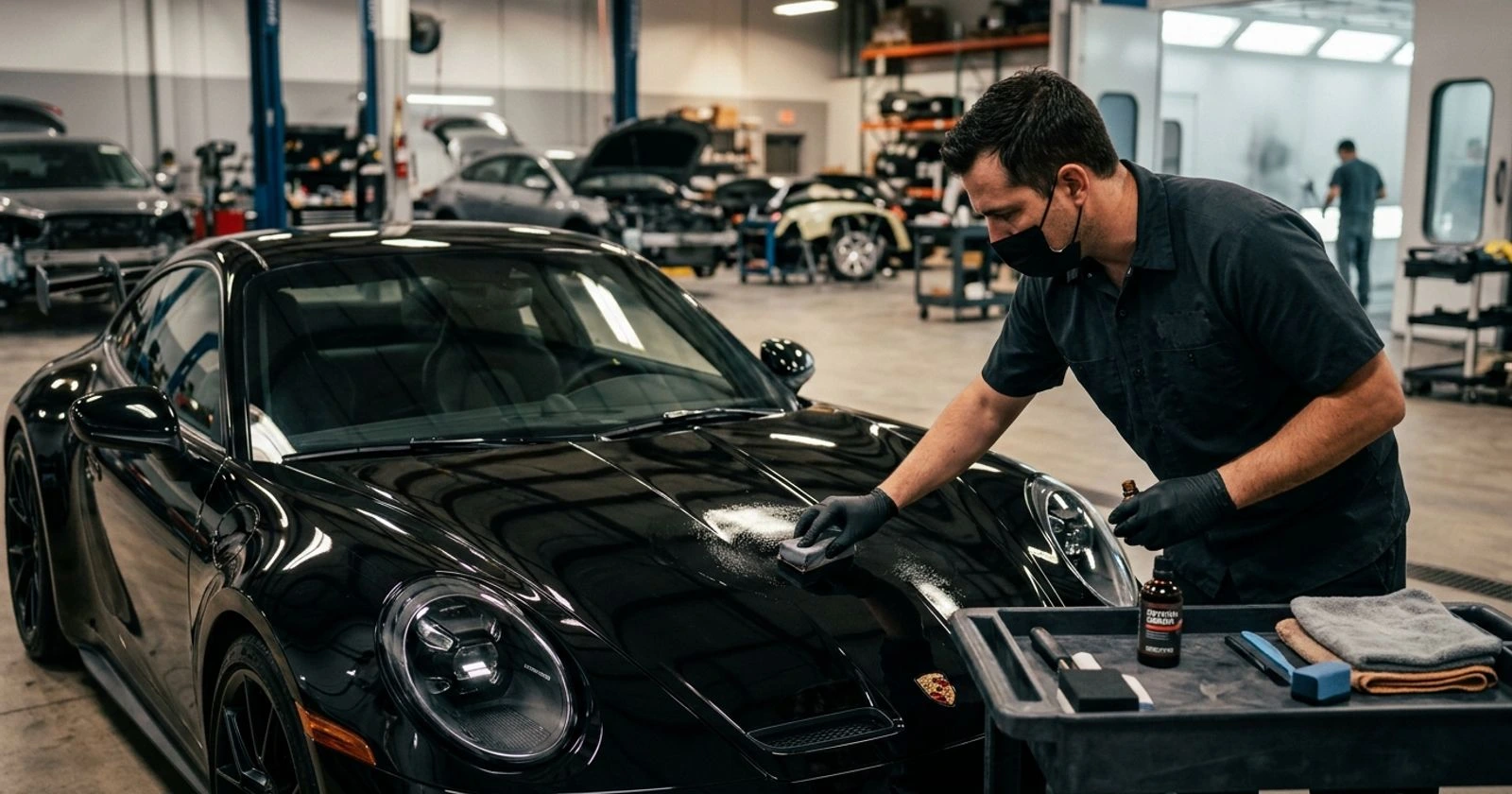
Professional installers do not guess if the paint is ready. They use electronic gauges to measure paint thickness and verify complete curing before beginning the coating process. They also use specific clay bar decontamination tools and iron remover products to clean the surface without damaging the fresh clear coat. Products like SB3 Coatings Solo or SB3 Coatings Optic require this level of clinical preparation to bond correctly to the vehicle.
What I noticed over years of inspecting failed DIY jobs is that owners almost always skip the chemical decontamination step. This traps embedded dirt right under the new coating and degrades the visual finish of the collision repair. Professional ceramic coatings provide 1 to 3 years of verified protection only when applied correctly over fully cured, surgically clean paint.
Stop taking chances with expensive auto body repairs. Verify your paint is ready for long-term protection and book a free assessment to discuss the right post-repair care for your vehicle.

Frequently Asked Questions
How long after collision repair can I apply ceramic coating?
You must wait a minimum of 60 days to allow the fresh paint and clear coat to fully outgas and cure. Applying it sooner traps solvents and causes the paint to fail.
Will ceramic coating void my collision repair warranty?
It will only void the warranty if applied before the 60-day cure window. Trapping solvents causes severe adhesion failure and paint clouding that auto body shops will not cover.
Is it safe to wash freshly painted collision repair panels?
You should wait 72 hours to two weeks before the first gentle hand wash. Avoid high-pressure hoses, automated car washes, and harsh chemicals during this time.
What is the difference between factory paint cure time and collision repair paint cure time?
Factory paint is baked at extreme temperatures on bare metal before assembly. Collision repair paint cures chemically over several weeks at lower temperatures to protect the assembled vehicle’s sensitive electronics and interior.