A modern windshield is a complex structural component housing advanced safety sensors, cameras, and heads-up displays. This technological shift means the price to fix damaged auto glass varies wildly based on the specific systems your car relies on.
Understanding the true windshield repair vs replacement cost requires looking past national averages and evaluating the specific calibration needs of your vehicle. At Unique Collision Repair, our technicians see hundreds of these cases monthly and can help clarify exactly what your car requires for safe operation in 2026.
Key Takeaways
- Standard windshield replacements in 2026 range from $250 to $800, while ADAS-equipped vehicles cost between $600 and $1,500.
- Minor chips and cracks smaller than a dollar bill can usually be repaired for a fraction of the cost of a full replacement.
- Advanced Driver Assistance Systems (ADAS) calibration is a mandatory safety step that adds $150 to $500 to modern replacement costs.
- Orange County labor rates and OEM glass preferences directly impact local pricing compared to national averages.
Table of Contents
- The Real Windshield Repair vs Replacement Cost in 2026
- Quick Comparison: Repair vs. Replacement at a Glance
- The Hidden Expense: Why ADAS Calibration is Mandatory
- Paying Cash vs. Using Insurance: The Decision Framework
- Frequently Asked Questions
Real Windshield Repair vs Replacement Cost in 2026
Pricing for auto glass services has shifted significantly this year. Standard vehicle replacements without advanced cameras currently run between $250 and $800. Modern vehicles equipped with Advanced Driver Assistance Systems (ADAS) require highly specialized glass and recalibration, pushing the total replacement range to $600 to $1,500.

A simple rock chip fix typically costs under $150 by contrast., the answer heavily depends on the severity of the impact and your car’s technology package.
Regional cost variations dictate your final bill. National averages fail to account for California’s economic factors. in Orange County. Facilities here must maintain strict environmental compliance and invest in advanced calibration bays, which slightly elevates local pricing compared to shops in other states.
, expect estimates to align with these regional operational standards.
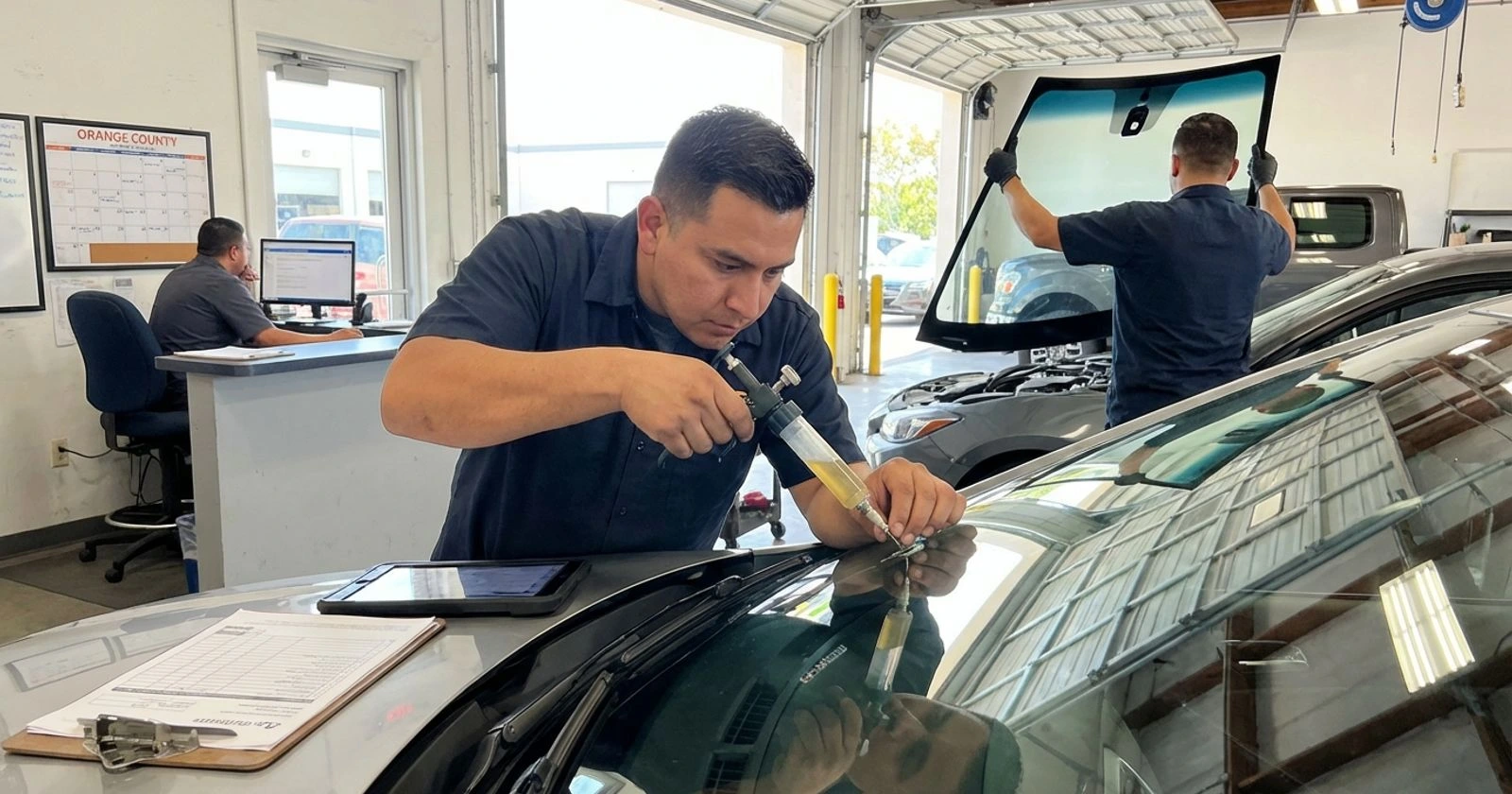
A common financial risk is repair failure. Many drivers attempt to patch damage that is too severe to save money. When a poorly executed resin application fails under the pressure of highway driving or temperature changes, the crack spreads rapidly.
You end up paying for the initial patch and the inevitable full replacement just weeks later. Getting an accurate assessment right away prevents these escalation costs. facility ensures the job is done right the first time, preventing minor damage from turning into a major structural issue.
Quick Comparison: Repair vs. Replacement at a Glance
Understanding the physical limits of auto glass restoration helps you avoid wasting money on fixes that will not last. Strict physical limits dictate repair eligibility. A bullseye chip must be smaller than a quarter, and the central pit cannot penetrate the inner layer of the safety glass.
Damage extending to the edge of the windshield compromises the structural integrity of the entire vehicle frame. The windshield supports the roof during a rollover accident and directs the passenger airbag deployment. If a crack touches the outer perimeter, a full replacement is the only safe option.
| Feature | Windshield Repair | Windshield Replacement |
| Average Cost | $75 to $150 | $600 to $1,500 (ADAS equipped) |
| Damage Limit | Under 2 inches, shallow depth | Any size, deep penetration, edge damage |
| Time Required | 30 to 45 minutes | 3 to 6 hours (includes calibration) |
| Insurance | Often covers 100% (no deductible) | Requires comprehensive deductible ($250-$500) |
Choosing between Original Equipment Manufacturer (OEM) and aftermarket glass is another major factor in 2026. OEM glass is produced by the same manufacturer that built your car, guaranteeing exact fitment and acoustic properties.
Aftermarket glass meets minimum federal safety standards but often lacks the specific acoustic dampening and precise camera brackets required by modern luxury vehicles. Using aftermarket parts on heavily computerized cars can void factory warranties on safety systems.
Always opt for shop-based services when replacing an ADAS-equipped windshield. Mobile installers cannot control humidity, temperature, or the perfectly level flooring required for precise camera calibration. If you need auto glass and windshield repair, a controlled environment is essential. This is just as critical as the controlled conditions needed for automotive refinishing services or chassis alignment services.
Hidden Expense: Why ADAS Calibration is Mandatory
Advanced Driver Assistance Systems include features like lane departure warnings, automatic emergency braking, and adaptive cruise control. These systems rely on a forward-facing camera mounted directly to the inside of your windshield. When the glass is replaced, that camera is completely disconnected and moved to the new windshield.

This explains why ADAS calibration accounts for $150 to $500 of your total replacement cost.
Calibration is not a simple software reset. It requires specialized optical targets, perfectly level diagnostic bays, and OEM-certified software procedures. Technicians must align the camera to recognize the exact center of the vehicle and measure its distance from the road surface down to the millimeter.
I-CAR certified technicians follow strict manufacturer guidelines to ensure every sensor functions exactly as it did when the car left the factory.
Think of ADAS calibration like an eye exam for your car. Just as an incorrect glasses prescription throws off your depth perception, a misaligned camera distorts the vehicle’s understanding of the road ahead. During my reviews of diagnostic scanner data, the mechanical consequences of skipping this step become clear.
A camera misaligned by just one millimeter at the windshield translates to a visual error of several feet when scanning the road 100 yards ahead. Your automatic braking system might trigger randomly on the freeway or fail to engage when a car stops suddenly in front of you.
Because calibration is only required for full replacements, addressing minor chips early is a highly cost-effective preventative measure. Fixing a small star-break immediately saves you from the complex calibration process required once the glass cracks completely. during the same visit to save time.
Paying Cash vs. Using Insurance: The Decision Framework
Deciding how to pay for your glass service comes down to simple math regarding your deductible. Most California drivers carry a comprehensive insurance deductible of either $250 or $500. If you drive an older vehicle without cameras and your replacement quote is $300, filing a claim makes little financial sense.
You would pay $250 out of pocket anyway, and the claim stays on your record.
The math changes entirely for modern vehicles requiring OEM glass and complex ADAS calibration. If your total estimate is $1,400, your insurance policy absorbs the massive $900 difference.. You do not have to settle for the aftermarket glass your insurance company might initially suggest.
My recommendation to clients is usually to consider the potential impact of glass claims on future premiums. While a single comprehensive glass claim rarely spikes your rates, multiple claims within a three-year period can flag you as a higher risk.
Navigating the claims process efficiently involves having your chosen facility communicate directly with the insurance adjuster to justify the need for OEM parts and factory-level calibration. makes this process seamless.
Unique Collision Repair is family-owned since 1984 with a lifetime warranty on repairs. We handle the insurance paperwork, source the correct factory glass, and perform all structural and cosmetic work under one roof. ensure your vehicle meets all 2026 safety standards. today.
Frequently Asked Questions
How long does a full windshield replacement and calibration take?
A complete replacement on a modern vehicle typically takes three to six hours. The urethane adhesive needs specific curing time to ensure a safe bond, followed by the mandatory ADAS calibration process which can take up to two hours depending on the manufacturer’s diagnostic requirements. If you are curious about broader timelines for major damage, you can read more about how long does collision repair take.
Will my California auto insurance cover the cost of OEM glass?
Most standard policies default to aftermarket glass to save the insurer money. You can request OEM glass, but you may be required to pay the price difference out of pocket unless your policy includes a specific OEM endorsement rider. Working with a shop that provides thorough auto body repair tips and insurance guidance helps clarify your specific coverage.
Can a small windshield crack suddenly shatter while driving on the freeway?
The glass will not dramatically shatter into the cabin because auto glass is laminated with a strong inner plastic layer. A small crack can instantly spread across your entire line of sight due to freeway vibrations or sudden temperature changes from your air conditioning, severely obscuring your vision while driving. Evaluating your windshield repair vs replacement cost early prevents this exact scenario and keeps your vehicle safe for the road.